Prototype
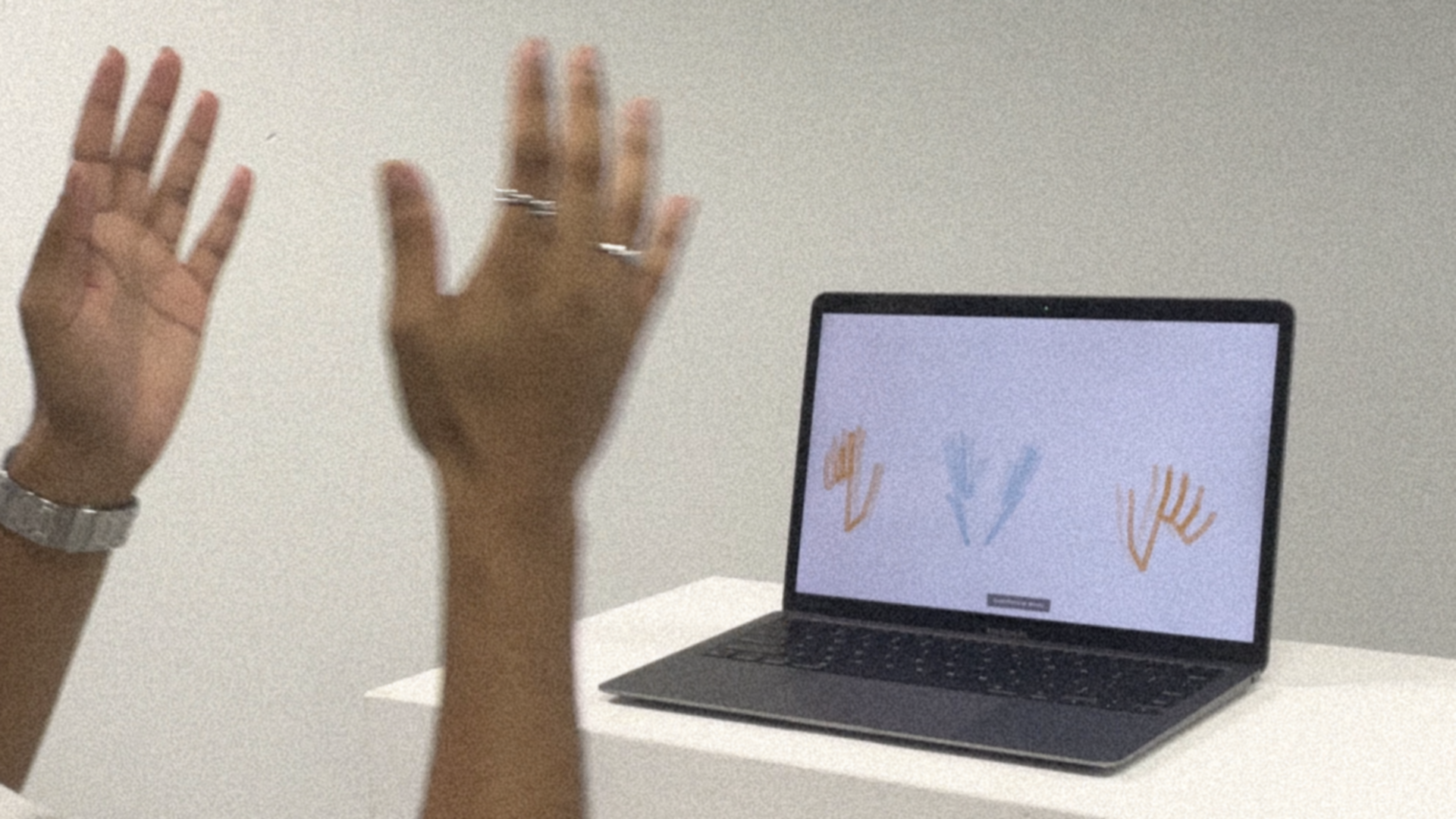
After refining the visual aspects of my prototype, I asked some friends to try it out and gathered their feedback. It was fascinating to see the variety of responses—some actively engaged by reaching out or trying to "hold hands" with the AI-generated hands, while others observed passively, focusing on how the hands mirrored their movements.
Although the prototype isn’t fully polished yet, it feels like a solid foundation for exploring my research themes of gestures, embodiment, and collaboration. The feedback highlighted areas for improvement, particularly in making interactions more adaptive and engaging for different user behaviors.
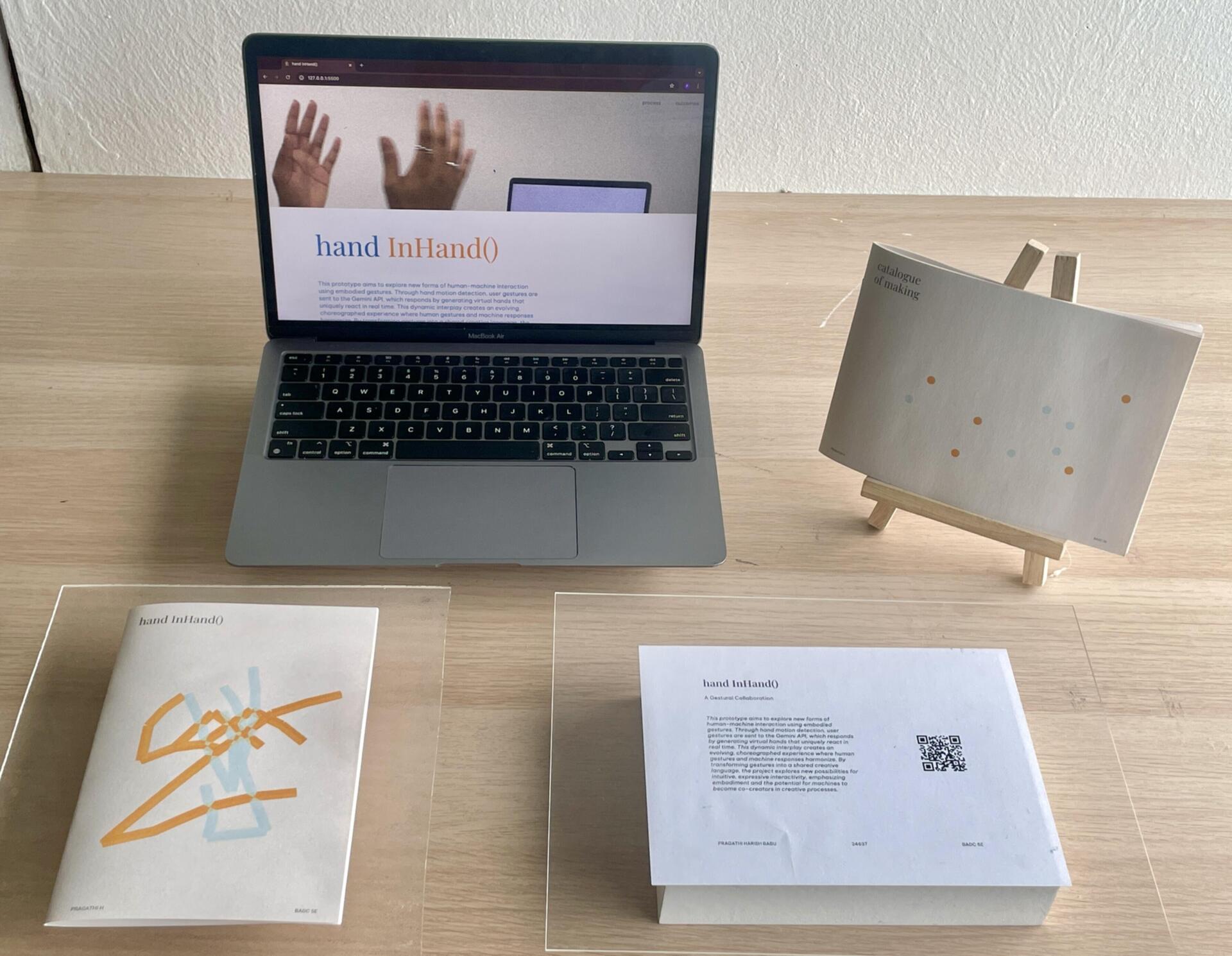
Final set up
For my final setup, I created two publications that captured different aspects of my project. The first was a catalogue of my making, which documented all the experiments I had worked on throughout the semester. This publication served as both a reflection of my process and a visual archive of the various prototypes I developed. The second publication focused on my final prototype and featured an interactive element: blue and yellow hands printed on transparent pages. When you flipped the pages, the hands seemed to interact with one another, which added a playful and dynamic touch to the overall presentation.
Alongside these publications, I set up a display with a description and title card of my project, as well as a QR code linking to my website for easy access to more details. To showcase my final prototype in action, I also had the website for the prototype displayed on my laptop. This setup allowed me to present my work in a way that was both visually engaging and interactive, offering viewers a deeper look into the development of my project while also making it easy to explore the online components.
Moving forward, I want to explore ways to bring this concept into a more tangible form by creating physical prototypes and experimenting with physical computing. By integrating sensors and actuators, I aim to build a system where user gestures can influence and interact with physical elements, bridging the gap between digital AI responses and real-world experiences.
This would allow me to test how physical embodiments of AI, like robotic hands or gesture-responsive devices, could enhance the sense of collaboration and engagement. Through these experiments, I hope to better understand how physicality can deepen the interaction between humans and machines.