RPO final refinements
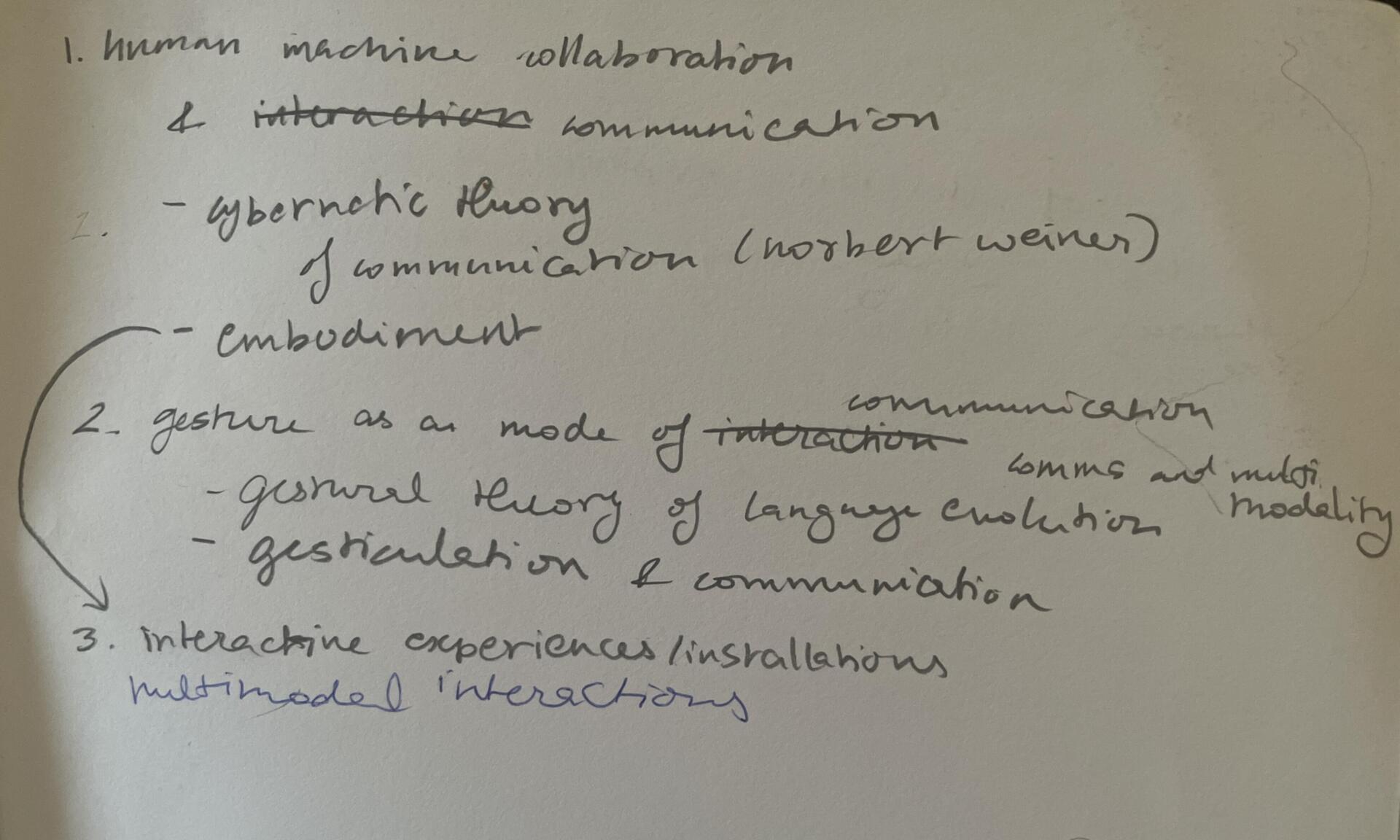
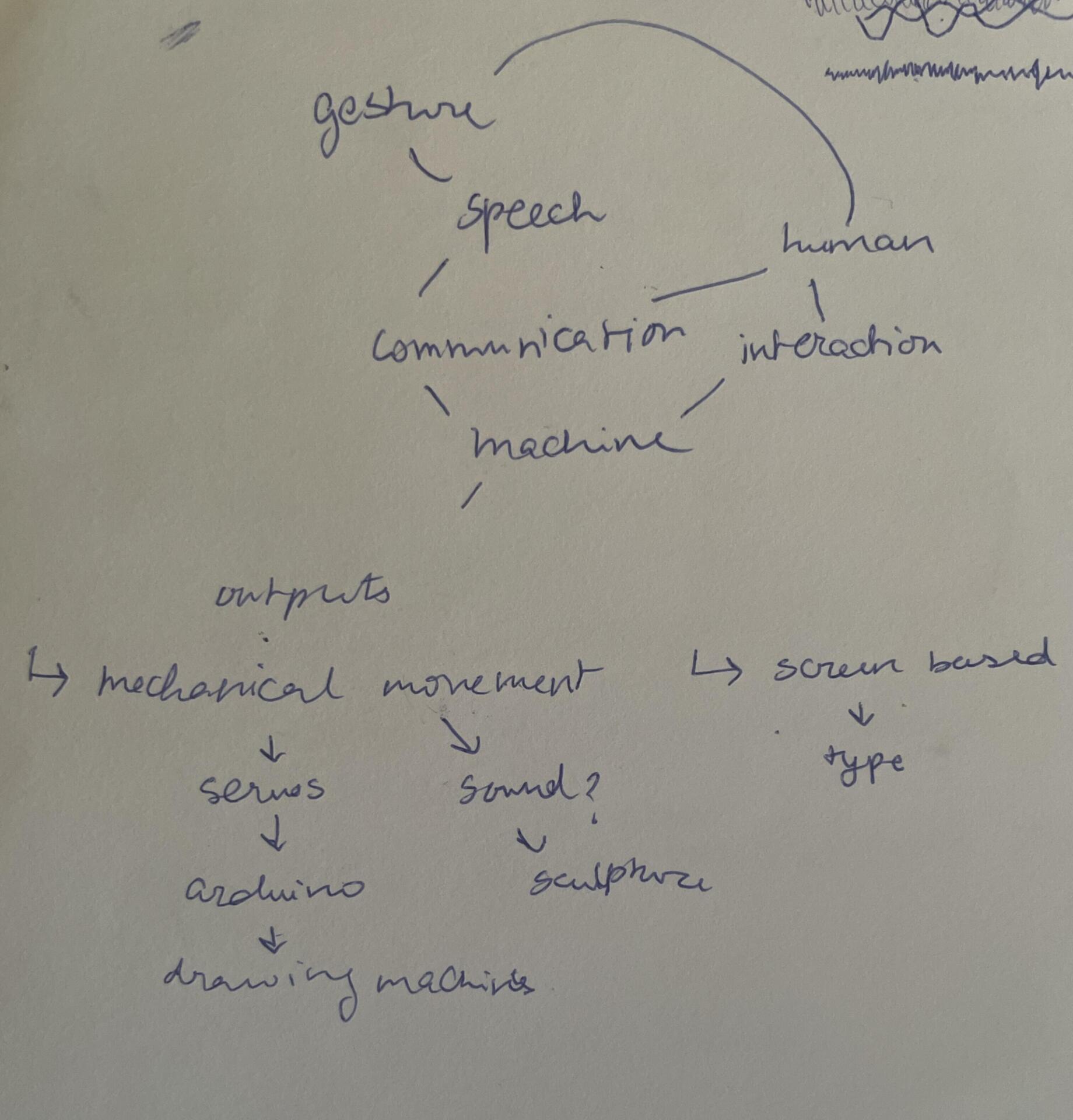
This week, I’m focusing on refining my RPO in preparation for the summative submission, taking into account all the feedback I’ve received. I started by expanding my bullet points into fully developed paragraphs, beginning with the literature review. I synthesized the notes I’d taken from my readings into cohesive sections, each addressing one of my three research pillars. For my research objective, I’m focusing on how hand gestures can serve as a natural and intuitive mode of communication between humans and machines, particularly in the context of interactive, gesture-based experiences. This research aims to move beyond traditional command-based systems, exploring how gestures can enable collaborative, co-creative processes in digital and physical spaces. By developing prototypes that utilize gesture recognition technologies, I plan to test the potential for real-time interaction, where both humans and machines contribute dynamically to the creative experience.
To structure my research, I’ve divided it into three key pillars. The first pillar focuses on gesture as a mode of communication, exploring the role of hand gestures as a natural, intuitive interface in human-computer interaction (HCI). The second pillar delves into embodiment and interactive experiences, examining how bodily movements, particularly gestures, shape the interactive process and create immersive digital environments. Finally, the third pillar addresses human-machine collaboration, drawing on cybernetic theory to explore how machines can become co-creators in artistic processes, not just passive tools. By examining these pillars, my goal is to develop prototypes that explore how gestures can be used in creative contexts, fostering collaboration and enhancing real-time communication between humans and machines. This research will document both the technical aspects of gesture recognition and the philosophical implications of machines as active collaborators in artistic creation.
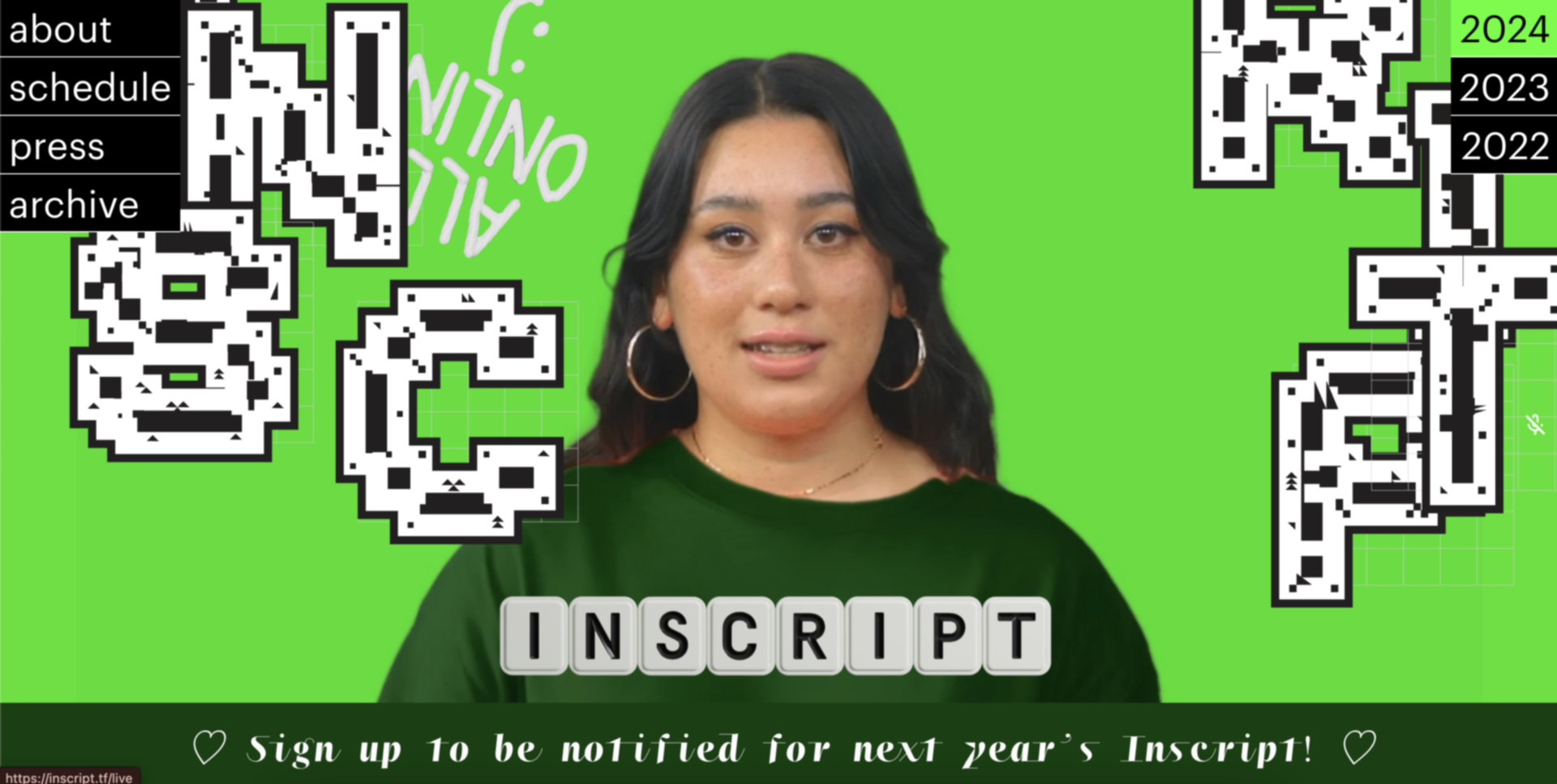
Inscript type festival
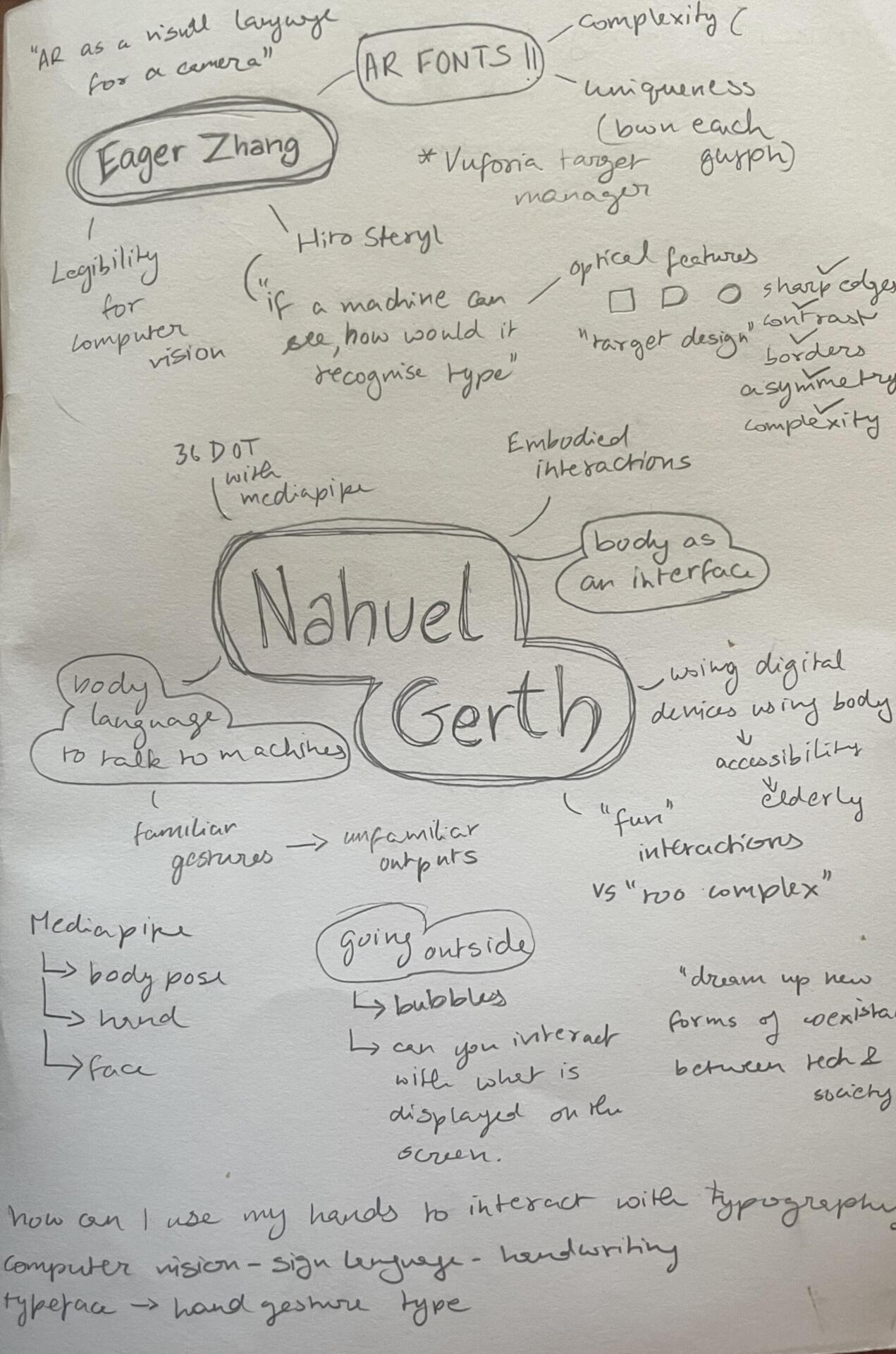
Attending Inscript 2024 online provided me with a wealth of insights and inspiration, particularly in the realm of interactive and experimental design. Nahuel Gerth's talk on "Embodied Typography" resonated with me deeply, as it explored how the human body can be used as an interface for interacting with type and graphics. This experimental approach to design, which embraces the unpredictability and playfulness of human-computer interaction, aligns with my interest in exploring the intersection of technology and human experiences. It sparked new ideas for how I might integrate physical interaction and embodied experiences into my own project, expanding the boundaries of traditional type design.
Zach Lieberman's presentation on "Sound Type" also had a significant impact on my thinking, especially his exploration of using sound waves to create letterforms. The idea of connecting typography with audio, where "what you see is what you hear," opened up intriguing possibilities for blending different sensory experiences. This idea of multisensory design could be an exciting direction for my project, particularly as I consider how various forms of media—sound, motion, and graphics—can collaborate to create a more immersive and engaging user experience. Lieberman’s work with generative and interactive art, along with his focus on creative coding, reinforced the potential of code as a tool for artistic expression and led me to reconsider how I might use code in my project.
The combination of these talks, alongside the broader discussions at Inscript, has inspired me to think more creatively about how technology can amplify the sensory and emotional impact of design. By blending physical interaction, generative art, and multisensory experiences, I feel more equipped to take my project into innovative, experimental territories. These ideas are shaping my approach as I work toward integrating new forms of interaction and expression into the AI-driven systems I am designing.