Writing
The past week has been consumed almost entirely by the finishing touches on my 8,000-word dissertation. After weeks of writing in sprints, compiling sources, and laying down the structure, I finally arrived at the phase I had been both anticipating and dreading: the edit. The discussion section needed serious attention—not in length, but in focus. During the first few drafts, I had packed it with technical breakdowns of experiments that, in hindsight, didn’t directly feed into my core research question. So I made the call to trim those and highlight the experiments that were most aligned with my goals around gesture-driven interaction and sign language learning. Experiments like handInHand() and the AI-generated storytelling prototype felt much more relevant and resonant, and deserved to be foregrounded in the discussion. Editing that section felt like a necessary act of clarity—shaping the work to reflect what I truly cared about.
To make sense of the experimental journey, I also rewrote parts of the methodology and discussion to clearly mark the two distinct phases of the research: the first focused on exploratory, playful experimentation with gesture recognition, and the second centered on designing structured, educational prototypes. This two-phase division helped me frame the trajectory more coherently, especially in showing how early hands-on work directly informed the game proposals that came later. It also made writing the later chapters—particularly the conclusion—much easier, as I could clearly trace the evolution of the project from open-ended exploration to intentional application.
More writing
In the final stretch, I turned my attention to the "Notes for Further Research" and conclusion sections. These felt particularly meaningful because they allowed me to step back and think about what this work could become, beyond the confines of an academic document. I wrote about the importance of involving real DHH users in future testing, and imagined what it would look like to pilot the games in classrooms or community workshops. I also speculated on the potential of integrating AR/VR or more adaptive AI to elevate the learning experience. These weren’t just filler sections—they felt like a space to articulate real aspirations and map out a potential future for this research.
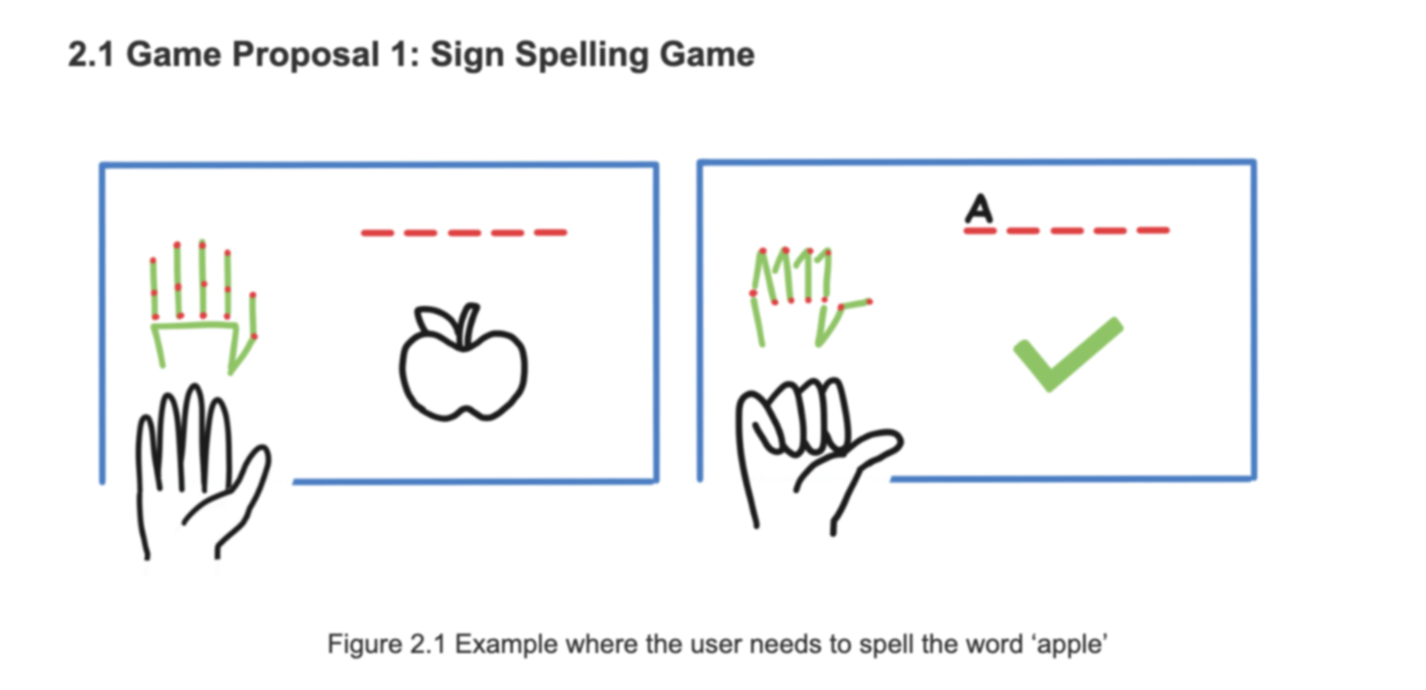
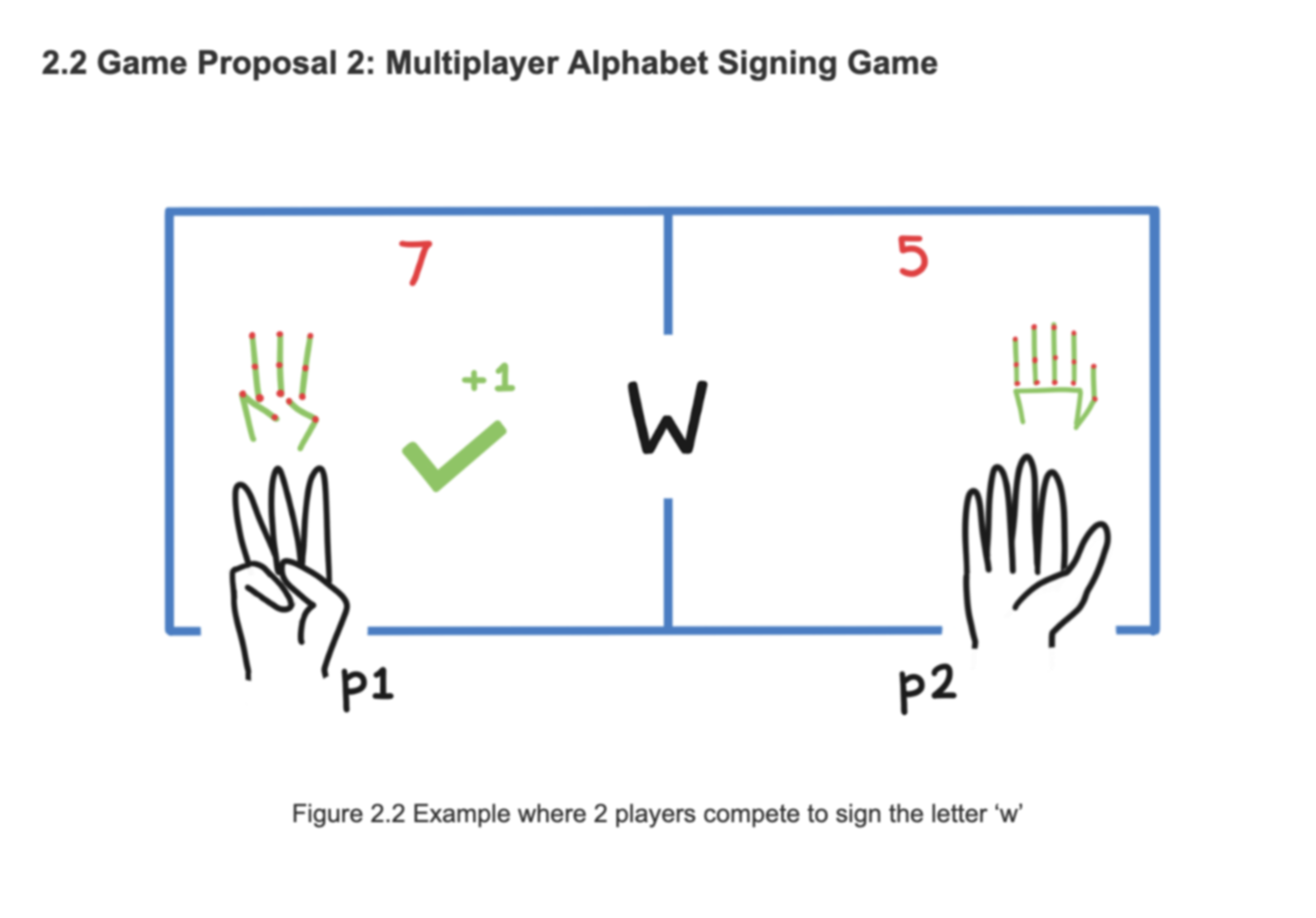
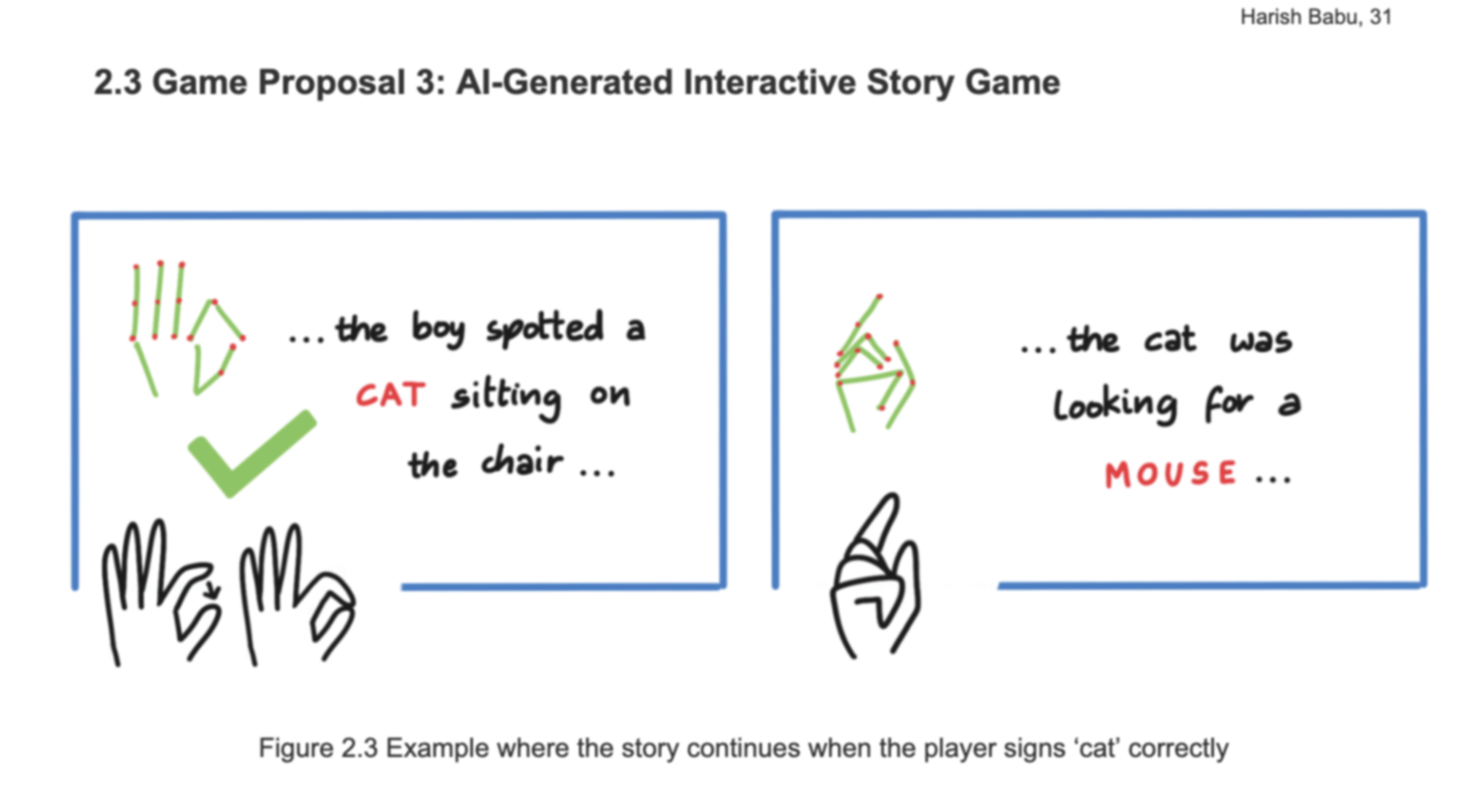
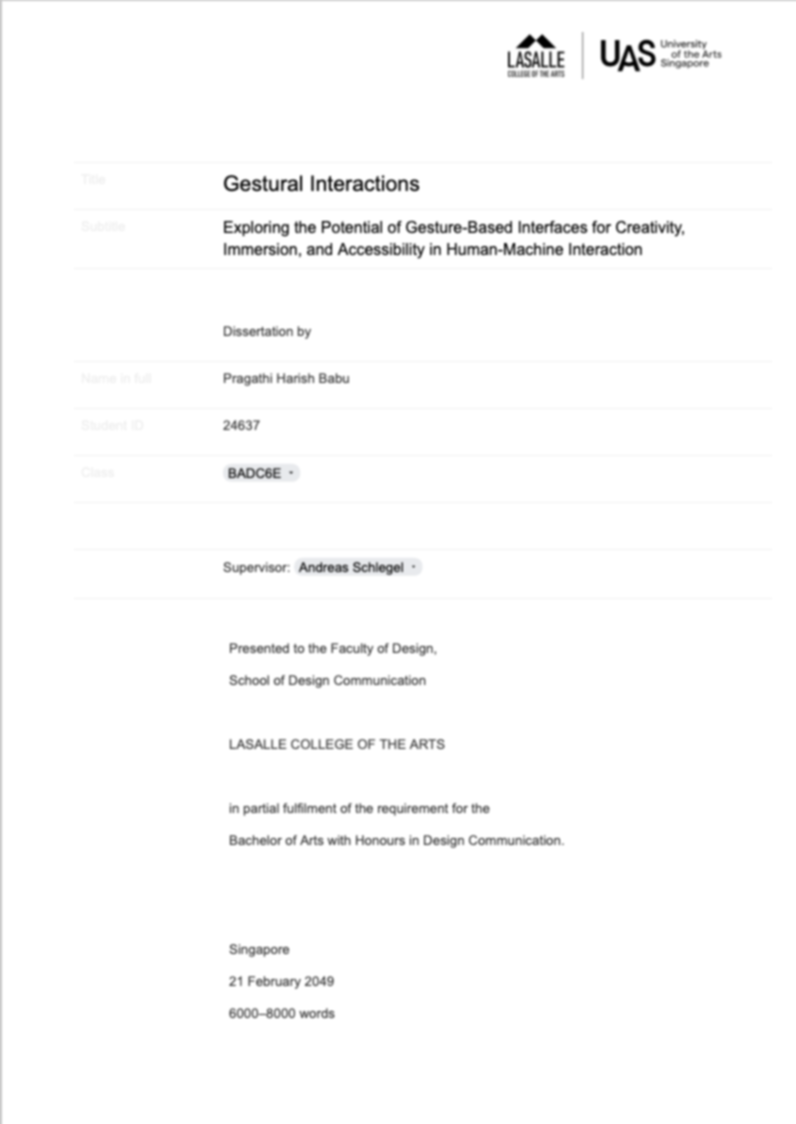
And then came the more visual, design-oriented bits—something I was honestly looking forward to. I created a handful of illustrations to accompany the experiments and game proposals, adding clarity and a bit of personality to the otherwise text-heavy document. Each figure needed a clear caption, which turned out to be more work than expected. Writing those few lines of text meant really understanding what each image was doing and how it contributed to the narrative. But in the end, they helped make the ideas more accessible and brought the whole document to life. After checking citations, cleaning up formatting, and giving it one last proofread, I hit submit. Just seeing the final PDF exported with my name and title on the cover page made all the late nights and tab chaos feel worth it.